
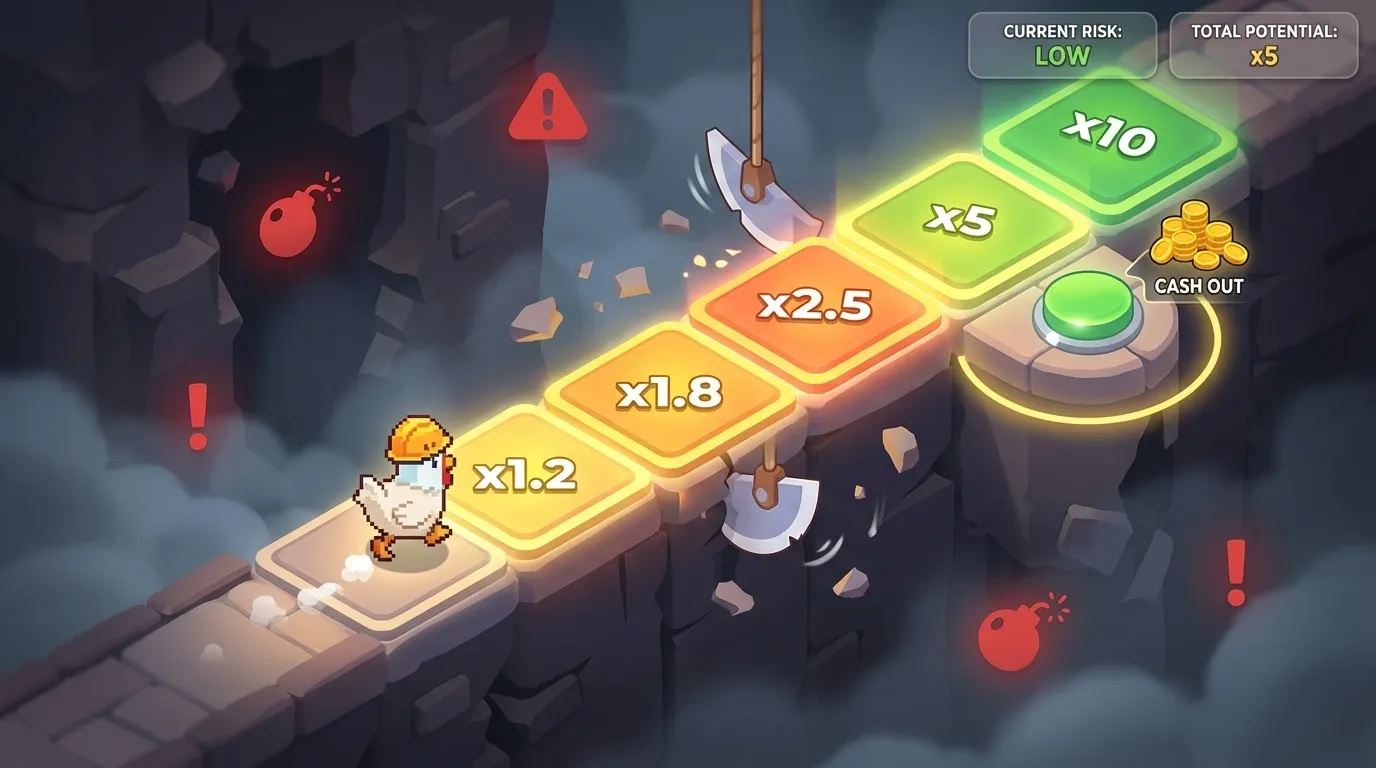
If you’ve been on social media lately, especially TikTok, you’ve probably come across videos of people playing the Chicken Road game. It is a game where the players try to help a chicken cross a busy road without it getting hit by oncoming cars.
How it works is that you stake a certain amount of money on the chicken, and the farther the chicken goes across the road, the bigger the cash-out value becomes. But then, if a car hits the chicken before you cash out, it is not a win.
What is the Chicken Road Game, and How Does it Work in Pakistan?
From the description above, you’d probably already know that the Chicken Road game is not just a casual arcade game, since players have to stake their money on it. Specifically, it is a casino-style crash game, similar in mechanics to games like Aviator and others in that category.
Now, how does the game work in Pakistan, and is there really any peculiar thing about Chicken Road Game Pakistan? The honest answer is: not much, really. The game works the same way it does everywhere else.
It doesn’t matter if you’re playing Chicken Road in Pakistan or anywhere in the world, your goal is to win. Of course, the game, like most other casino games, is largely dependent on luck. However, there are ways you can actually improve your chances, and in turn your payout, at the end of your playing session.
How to Play The Chicken Road Game Better
There are three basic elements that determine whether you win or lose in a crash game like Chicken Road:
- The risk you take
- Your timing
- The multiplier
Everything else revolves around these three.
Understanding and Managing Risk
The first part of risk management actually starts before the game even begins. It starts with how much money you decide to stake.
This is where many players make their first big mistake. They jump into the game without clearly deciding how much they’re willing to spend. As a result, they keep increasing their bets little by little, and before they realize it, they’ve gone way overboard.
Once you decide on your bankroll, the next step is how you use it. A good rule of thumb is to divide your bankroll into at least ten equal parts. Each part represents what you’ll use for one round. For example, if you set aside ₨10,000 to play, you should be staking around ₨1,000 per round, not the whole amount at once. This way, even if you lose a few rounds, you’re still in the game.
The Multiplier
Out of the three main elements, the multiplier is the one you don’t really have control over. Once a round of Chicken Road starts, it is completely up to the game system. As your chicken moves forward safely, the multiplier keeps increasing, and your original stake gets multiplied as you progress.
Now, every new step the chicken takes forward means there is a higher chance that a car will suddenly appear and end the round.
Since you can’t manage or control how far the multiplier goes, the only thing you can control is how you react to it. You would agree that a good reaction is cashing out while you’re still in profit. But then, how do you actually know when to cash out?
Knowing When to Cash Out (Timing)
To be honest, you can’t truly know when to cash out. The game is engineered so that the crash happens randomly. But here’s what you can do.
Before you even start any round, decide how far you’re willing to go before cashing out. Don’t wait until the multiplier is rising and your emotions kick in. Make the decision ahead of time. For example, you might decide that for this session, you’ll always cash out at 2x. Or maybe 1.8x. Or 3x, depending on your comfort level. Then discipline yourself and stick to it.
While you might feel tempted to always hold on a little longer and wait for “just one more step,” it’s important to remember that the game is not a get-rich-quick scheme. Playing too aggressively in search of a massive payout will, more often than not, end in disappointment.
Another thing you must do is to set clear session limits. Before you begin playing, decide how much you want to win before you stop, how much you want to lose before you stop, and also, how long you want to play before you stop. These rules act as guardrails. They protect you from impulsive emotional decisions and keep your gameplay structured.
Final Thoughts
At the end of the day, playing the Chicken Road Game is all about balance. If you play too safely, your profits will grow slowly. If you play too aggressively, your balance may disappear just as fast as it grows. The real goal is to find a middle ground that fits your bankroll, your personality, and your risk tolerance.